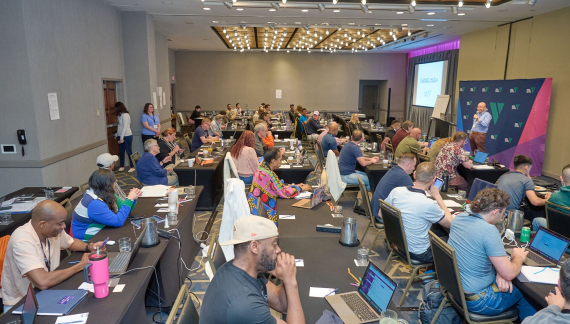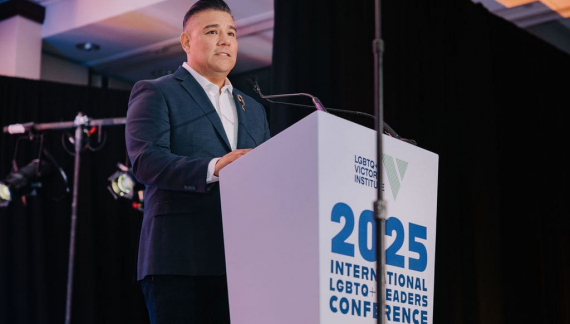
LGBTQ+ leaders gathered, conversed, collaborated and shared ideas across panels on how to fight for LGBTQ+ rights in the U.S. and worldwide at a time when civil protections are politically under attack for three days at the LGBTQ+ Victory Institute’s 41st annual International LGBTQ+ Leaders Conference.
With LGBTQ+ global solidarity, the state of political power and the health equity movement all being essential conversations on how to defend democracy on behalf of LGBTQ+ communities, MSNOW and PBS correspondent Jonathan Capehart moderated the final plenary discussion, “Going Viral For Change: Winning Hearts and Votes in the Digital Era,” on the last day of the conference.
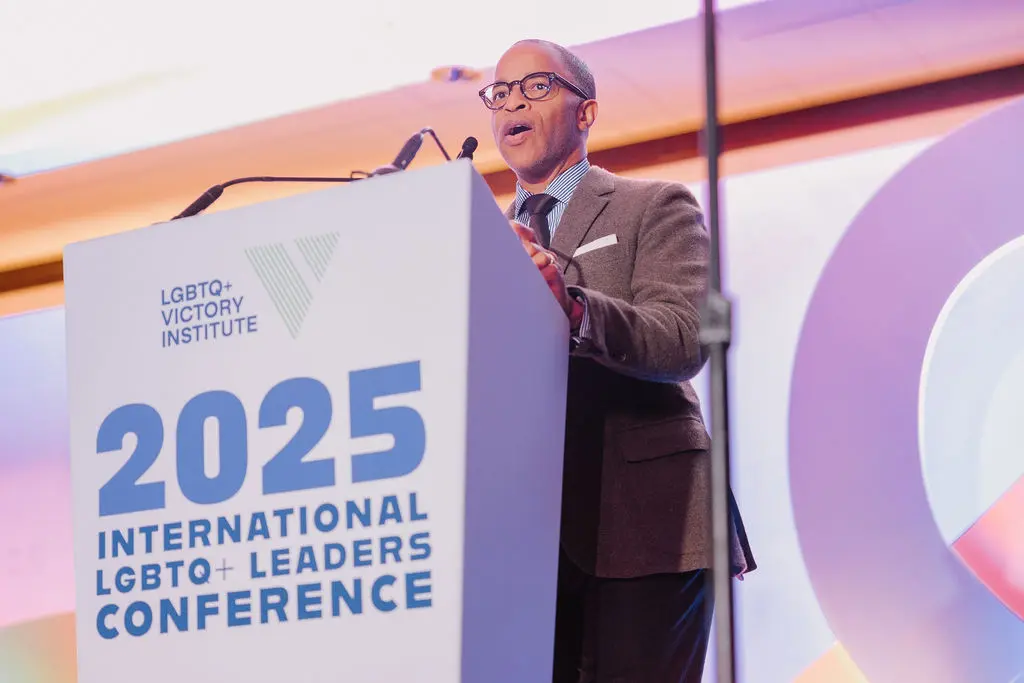
MS NOW “The Weekend” anchor Jonathan Capehart opens the Going Viral for Change plenary at the International LGBTQ+ Leaders Conference. Photo by United Photography.
“We are going to discuss how the panelists who are about to come up here how they use social and new media to engage constituents, counter misinformation and make complex policy issues accessible,” said Capehart.
The panel consisted of Charlotte Clymer, LGBTQ+ Victory Fund board member, writer and communications strategist; Sara Guerrero, Communications Director for Rep. Robert Garcia; RaeShanda Lias, a social media strategist and LGBTQ+ advocate; and Jalen McKee-Rodriguez, a San Antonio, TX, city council member.
The four panelists spoke about their different experiences engaging LGBTQ+ communities. And what came out of the session was a shared message across the board—going viral wasn’t about chasing likes or algorithms, but about leading with courage, speaking plainly without diluting the truth, and building trust to drive impact, as Capehart put it.
Charlotte Clymer
Clymer opened, saying social media strategists and consultants can teach a lot—give insight on editing, programming content and buying ads, etc. Though she said what’s important is being able to say things others are too scared to say, calling that the special sauce to social media.
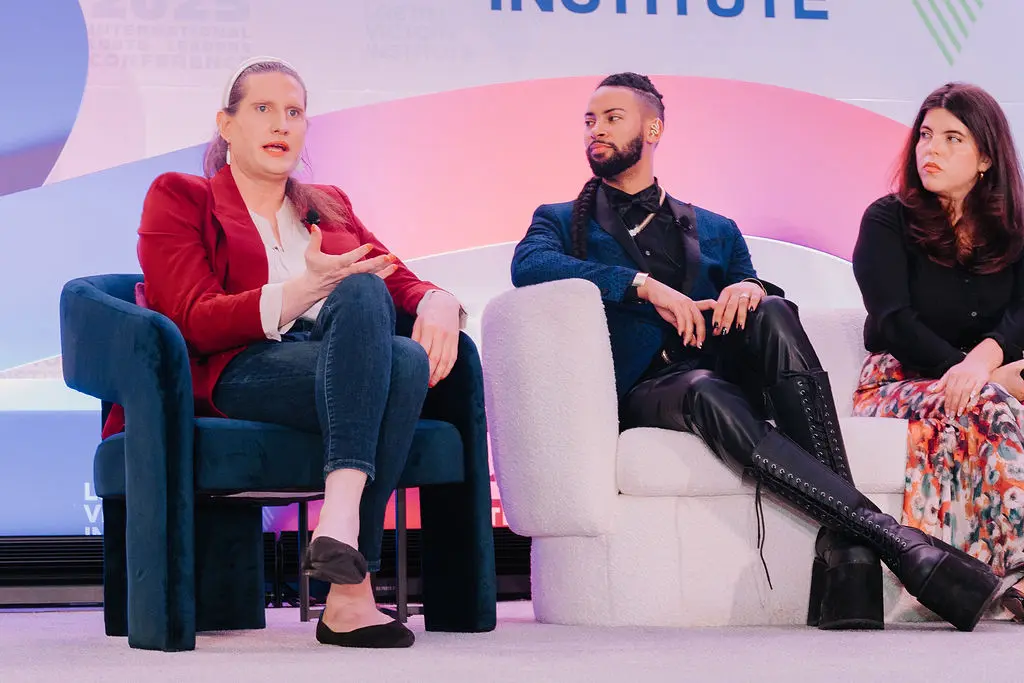
Charlotte Clymer is a LGBTQ+ Victory Fund board member, communications strategist and activist. Photo by United Photography.
“Clients ask me all the time, ‘How do I go viral?’ And the answer is tantalizingly simple,” said Clymer. “You say things others are too scared to say. that they don’t feel safe to say because that’s what leadership means.”
Clymer said this is not a time for political leaders to be silent on LGBTQ+ rights, especially transgender people who are under attack in the U.S. and worldwide. She praised former president Joe Biden, who received the Chris Abele Impact Award, on continued advocacy for LGBTQ+ communities.
“I was struck by President Biden’s remarks yesterday because it could have been much longer in detailing his long, wonderful relationship with the LGBTQ+ community,” said Clymer, who added that Biden has supported transgender rights for many years, including in every state of the union address. “It’s not that hard to be a leader and stand up.”
Though she called out democratic lawmakers who have remained silent as the Trump administration kicked out transgender service members and their families from the military, or with the continued violence against transgender people.
“I will remember the silence of this moment,” said Clymer. “The deafening silence of this moment.”
“We stand together, we message together, and we don’t leave anybody behind,” she added.
Sara Guerrero
Guerrero is the communication director for Rep. Robert Garcia, and she admires his authenticity, finding it essential following the 2024 elections.
“One of the things we’ve seen the most this year after the election last year was, again, the importance of being authentic with our audience,” said Guerrero, who shouted out her boss for being unapologetically himself.
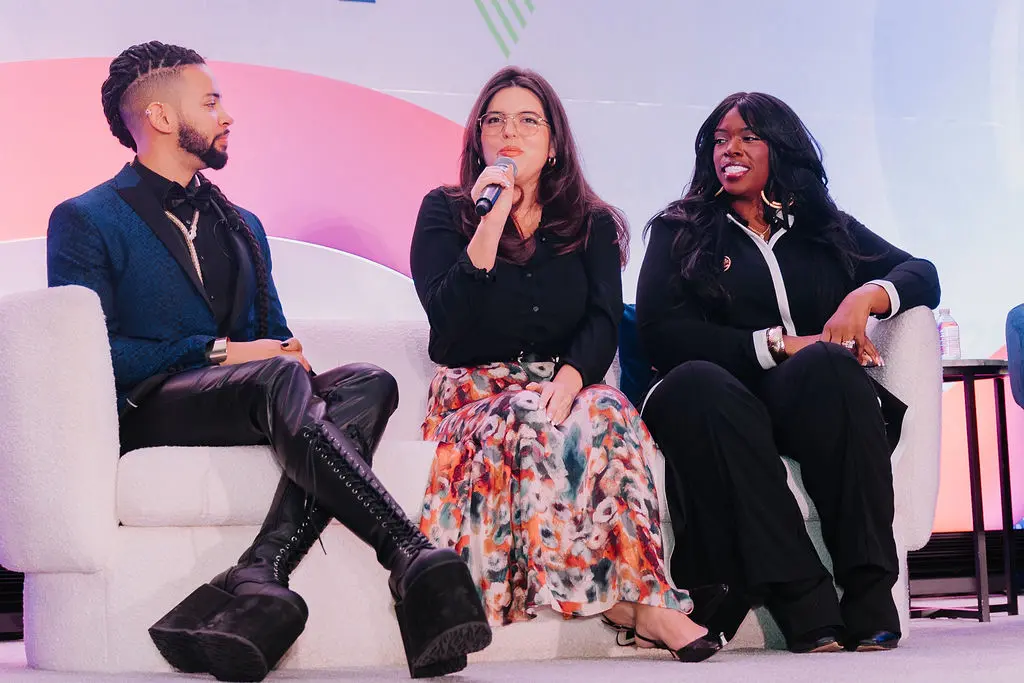
Sara Guerrero speaks on her experience working on Capitol Hill for Rep. Robert Garcia. Photo by United Photography.
“My boss is the first gay Latino ranking member, top Democrat of the Oversight Committee,” said Guerrero. “He’s never ever going to tamper himself down.”
While Garcia had been labeled profane at times during interviews, Guerrero argued it resonated with people. “He says many more important things than just the f-word but like you said, it taps into the anger that people are feeling, and it’s important.”
And as his communications director, Guerrero never felt the need to tell Garcia “to dial it back a bit,” as Capehart asked her.
“I always felt what we’re up against requires that emotion,” she added. “You don’t elect somebody to go have a good time in D.C. and be really chill and give speeches that don’t resonate with you.”
RaeShanda Lias
Lias is an unapologetically Black queer woman living in Kentucky and an influential social media strategist whom Capehart called, after presenting her opening remarks, “very outspoken, vocal, take no prisoners.”
“None of this is normal,” said Lias, calling out those who view anti-Black racism and anti-LGBTQ+ sentiments as political disagreements.
“People want direct numbers, and they want you to give it to them straight,” said Lias, who’s known for breaking out her whiteboard to discuss the impact of policies and issues. “I just want you to give the facts.”
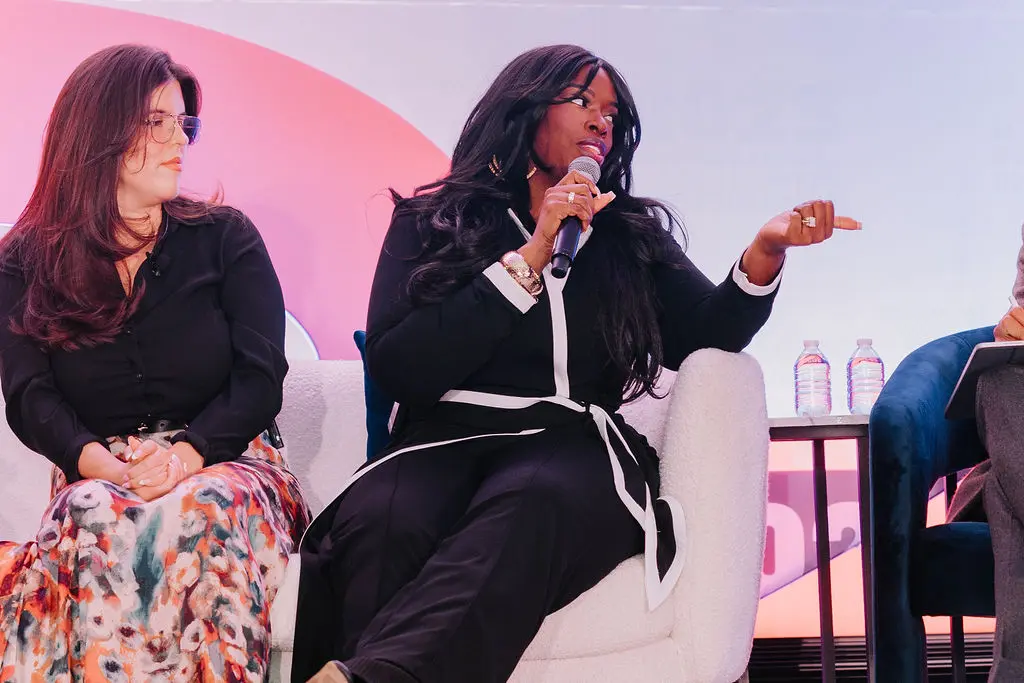
RaeShanda Lias encourages the crowd to speak unapologetic truth at the International LGBTQ+ Leaders Conference. Photo by United Photography.
Known for visual explainers, Lias tackles issues impacting marginalized communities and trending politics unapologetically with unfiltered honesty and clarity over caution.
And that’s the same energy she brought to the table at the panel, proclaiming communities want lawmakers to fight for them.
“We want to know that you’re in this with us because that means you’re getting a free paycheck,” added Lias. “And last time I heard that’s theft. If you are not doing your job, we will replace you with somebody that will do your job.”
Jalen McKee-Rodriguez
McKee-Rodriguez, a San Antonio, TX council member, emphasized the power of social media and broke it down into two sides: the positive impact and the negative.
“Sometimes you get on social media and it has the power to make you feel small,” said McKee-Rodriguez, adding social media can make you feel powerless. “It has the power to make you feel inferior, to compare yourselves, your lives, everything that’s going on in the world, show you the calamity that is the world.”
Though he argued that social media also has the opposite effect of making the world seem small.

Jalen McKee Rodriguez shares insights on connecting via social media at the International LGBTQ+ Leaders Conference. Photo by United Photography.
“You have the power to connect to people in a way that was impossible before and you realize that there’s more people who are experiencing the world in the way that you are, who are thinking about things in the way that you are, who are challenged and struggling with the same things that you are,” added McKee-Rodriguez, adding there are battles to be one on social media and it should be used as both the weapon and tool it is.
McKee-Rodriguez’s base is elderly Black women, or as he puts it, the grandmas and the aunties. As an elected leader, he typically gets two responses. One from other young gay Black men who feel represented and connected to him. And the aunties who are trying to relate to him by referencing the queer people they have in their lives.
“What people really want is someone who’s going to be themselves, be authentic,” said McKee-Rodriguez, arguing that authenticity, despite identity, is essential both in real life (IRL) and on social media.
The council member said constituents don’t want scripted or rehearsed responses. “They want to hear you advocate for them,” added McKee-Rodriguez. “They want to hear their frustrations echoed through you.”
McKee-Rodriguez said that’s the power of social media—it’s letting people in and showing them who you really are, allowing them to connect with you.
And all the panelists shared the sentiment that authenticity and honesty are the best policies on social media and IRL when connecting with and building trust in communities.
“Speaking up and telling hard truths to those who need to hear them,” said Clymer. “That is the only way we get through this moment, and that is something that people are going to appreciate many years from now when they’re wondering how we got through this moment.”
Watch the “Going Viral For Change: Winning Hearts and Votes in the Digital Era” plenary discussion at the 41st annual International LGBTQ+ Leaders Conference in the video below.