LGBTQ+ rights are under attack around the globe, and global policy experts and leaders agree that separation and isolation across borders have been a planned threat to global democracy at
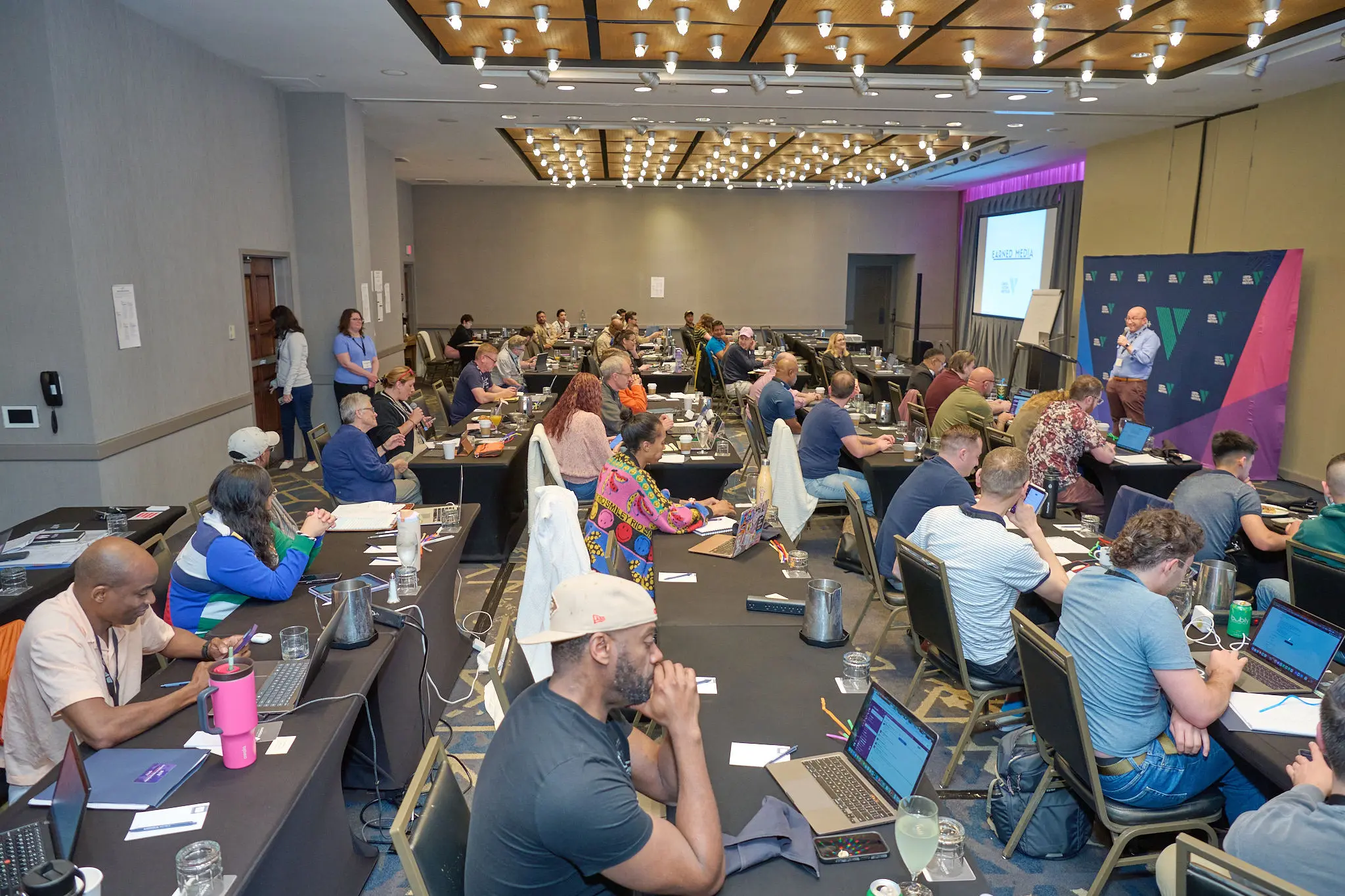
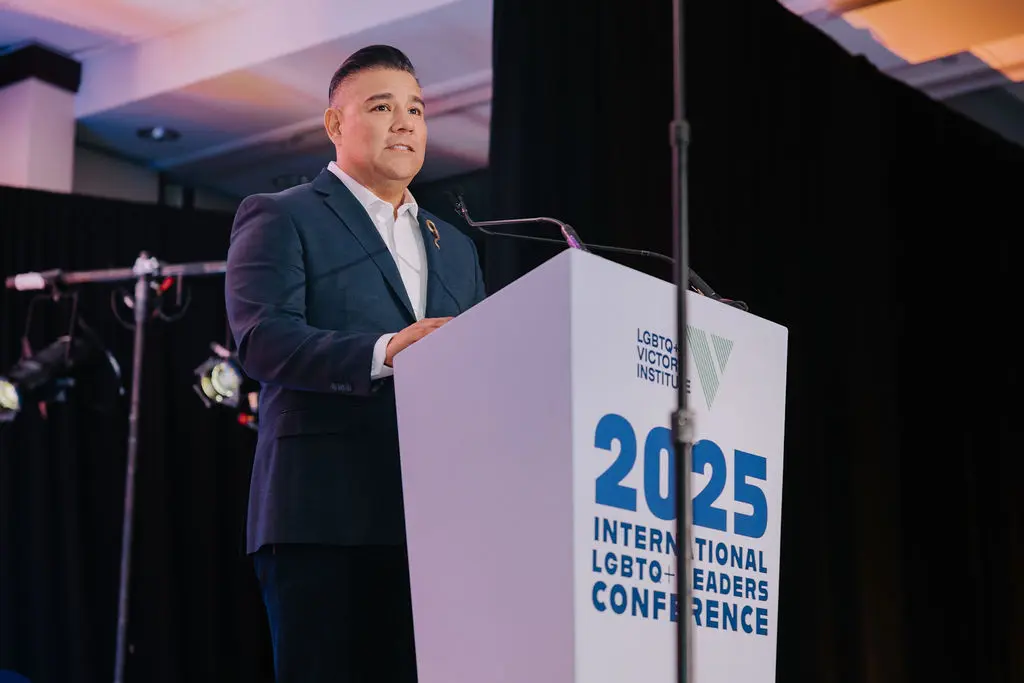
LGBTQ+ Victory Institute’s “Together, We Win: Lessons, Data, and Leadership from a Global Movement” plenary discussion at the 41st annual International LGBTQ+ Leaders Conference.
Alex Greenwich, a member of Parliament for New South Wales, Australia, gave opening remarks for the plenary discussion, crediting Victory Institute, the conference, and overall, collaboration with advancing LGBTQ+ protections back home—including bans on conversion therapy practices, making it easier to update gender marker on identification and strengthening hate crime protections.
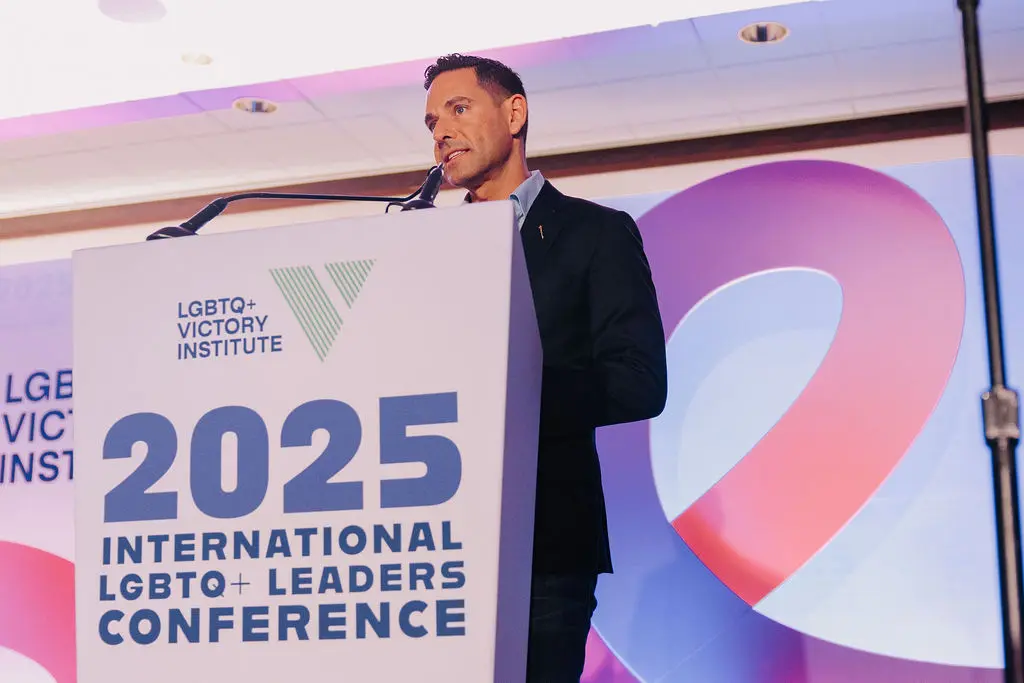
New South Wales MP Alex Greenwich opens global panel at International LGBTQ+ Leaders Conference. Photo by United Photography.
“We know that globally there are forces that continue to want to discriminate against us and continue to cause harm, but we know what we need to do to break through to combat that and to move forward for progress and equality,” said Greenwich. “And that is through the strong sense of hope that we all have. We know that when things are tough, they will change.”
“It’s through hope, tenacity, and hard work that we will continue to break through those barriers, continue to bring about meaningful change, and continue to make the globe a safer, more equal, and fairer place,” added Greenwich.
The panel discussion was moderated by Mateo de la Torre, Deputy Director of Global Programs at LGBTQ+ Victory Institute, and consisted of four panelists who spoke about global solidarity in the fight for LGBTQ+ equality: Neela Ghoshal, senior director of law, policy and research at Outright International; Reggie Greer, former senior adviser to the U.S. Special Envoy for LGBTQI+ Rights; Birgitta Ohlsson, director of political parties at the National Democratic Institute; and Arlene Tickner, Colombia’s ambassador-at-large for gender affairs.
Victory Institute has been working around the globe for over 15 years. Before introducing the panelists, De la Torre said that while training candidates and building programs are important, the most essential work has been connecting people.
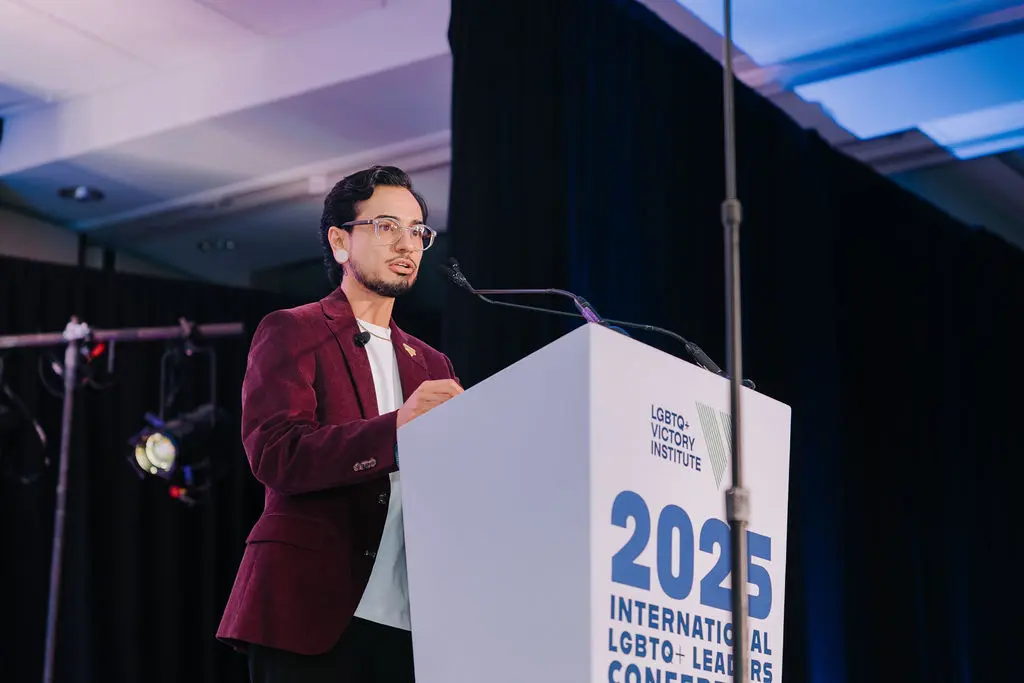
LGBTQ+ Victory Institute Deputy Director of Global Programs Mateo de la Torre addresses the attendees ahead of his panel at the International LGBTQ+ Leaders Conference. Photo by United Photography.
“It’s about building networks. Networks of people who can learn from each other, warn each other, and show up for each other,” said De la Torre. “We are committed to being bridgeuers, connectors, people who create the spaces where ideas, strategies, best practices travel faster than hate, and we’ve already seen results.”
With the LGBTQ+ Victory Institute leading a global network across Latin America, Asia, Europe and Africa, LGBTQ+ leaders have been able to share best practices for smarter campaigns, compare warning signs of opposition tactics, and raise red flags to track attacks.
De la Torre said, “That’s the power of refusing isolation.” Though he said some government forces worldwide are trying to isolate through visa restrictions, attacks on transgender people, attacks on immigrants, and militarizing cities, for example.
“But isolation has always been their strategy, and connection has always been ours,” added De la Torre.
Neela Ghoshal
Ghoshal is the senior director of law, policy and research at Outright International, where she tracks elections and attacks on LGBTQ+ rights and shares the learnings and data with others worldwide. Ghoshal spoke about four essential reports recently released in 2025.
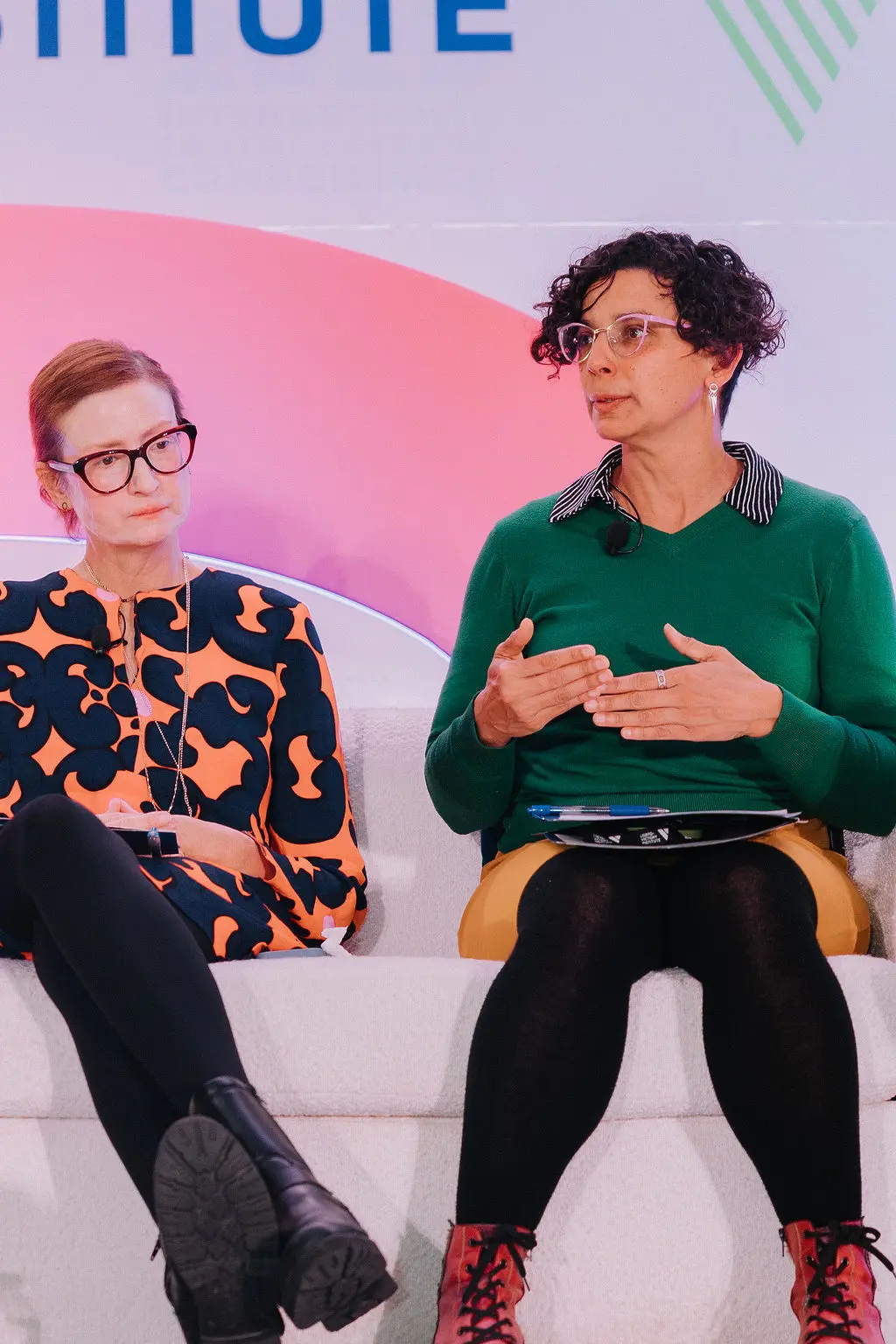
Neela Ghoshal shared insights from Outright International reports at International LGBTQ+ Leaders Conference. Photo by United Photography.
The “Defunding Freedom – Impacts of U.S. Foreign Aid Cuts on LGBTIQ People Worldwide” report reviewed how losing funding under the Trump Administration was going to impact the fundamental freedoms of LGBTQ+ communities.
Outright International’s annual “Pride Around the World” report was called “‘Show Up With No Shame’: Pride Around the World in 2024” to acknowledge that opposition forces are trying to shame LGBTQ+ people, particularly erase transgender and non-binary people.
“It’s essential for us to push back with pride and with visibility and to embrace all the members of our communities and work together,” said Ghoshal.
In its third report, “Queering Democracy: The Global Elections in 2024 and How LGBTIQ People Fared,” the organization examined 60 elections worldwide in 2024 and found a common narrative of weaponizing LGBTQ+ issues for personal political gain.
The last report Ghoshal discussed was “A Year in Attacks on Trans, Nonbinary, and Intersex People’s Human Rights,” which looked at 15 countries that have proposed or enacted laws rolling back protections for trans, non-binary and intersex people.
Ghoshal also revealed that in 27 countries, one of these terms is used to weaponize LGBTQ+ issues: gender ideology, gender madness, indoctrination or wokeism, which she explained shows how the terms are crossing over. “We have countries that are countries of people of color that are borrowing from white supremacist ideologies.”
Reggie Greer
Greer, the former senior adviser to the U.S. Special Envoy for LGBTQI+ Rights, said there’s been a rise in anti-LGBTQ+ sentiments and movements globally in recent years in places like Ghana, Iraq, Russia and Uganda.
“With the rise of populism and authoritarianism, we’re now seeing a whole-of-hate approach,” said Greer. “And what do I mean by that? It’s not just we’re seeing an uptick in anti-homosexuality acts or laws designed to punish LGBTQI+ people.”
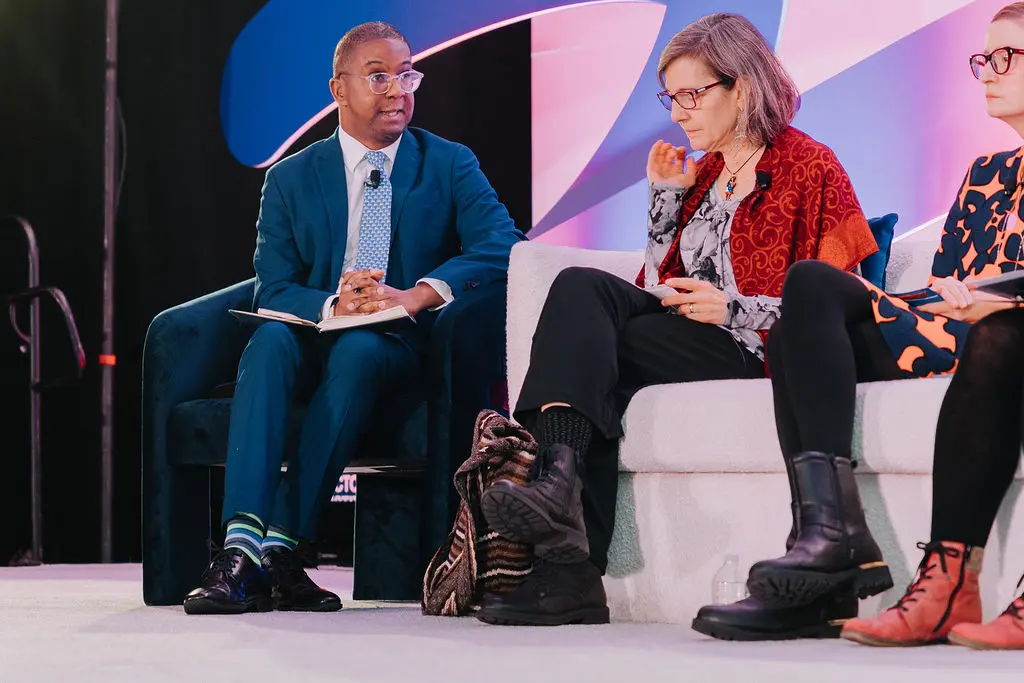
Reggie Greer shares insights with panelists and attendees at International LGBTQ+ Leaders Conference. Photo by United Photography.
According to the former senior adviser, there’s been an uptick in anti-LGBTQ+ bills in the U.S. since 2018, while calling out that there have been over 700 anti-LGBTQ+ bills presented in U.S. state legislatures in 2025.
On the flipside, Greer talked about the power of when governments do show up for LGBTQ+ rights and protections. “That is the power when governments show up,” said Greer. “People who otherwise would never feel seen feel seen for the first time.”
Birgitta Ohlsson
Ohlsson, director of political parties at the National Democratic Institute, cited data from the V-Dem Institute indicating that 72% of the world’s population currently lives in autocracies, connecting LGBTQ+ rights with a crisis of global democratic systems.
“It’s also very true that in the autocratic countries, you never see progress for the community for the rainbow community,” said Ohlsson.
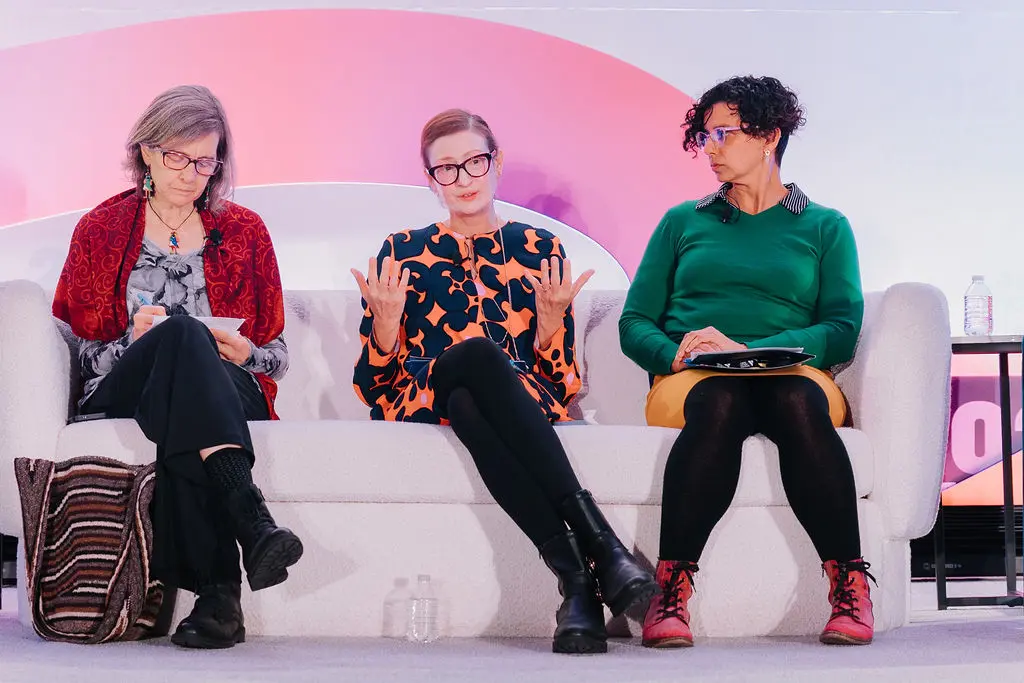
Birgitta Ohlsson discusses global insights on LGBTQI rights at International LGBTQ+ Leaders Conference. Photo by United Photography.
“What we also see today is that the autocracy inc, they are getting better organized,” added Ohlsson. So that’s why we need to be [smarter] and more strategic and sometimes more sensitive when we are approaching all these deals to have to kind of keep our eyes on the prize when we are maneuvering.”
Ohlsson said it’s important to find the “unexpected allies” and to remember that you and your loved ones are voters.
“You need to be very tough on your politicians that they deliver in the community,” said Ohlsson.
“It’s important to understand that the activists can create the momentum and then the politicians make it law,” added Ohlsson. “Create a momentum and then it’s [easier] for politicians to become allies.”
Arlene Tickner
Tickner, Colombia’s ambassador-at-large for gender affairs, cautioned that LGBTQ+ progression shouldn’t be viewed in a straight line. “Progress cannot be read in linear terms,” said Tickner.
In Colombia, there have been major advancements in LGBTQ+ rights and political participation, according to Tickner.
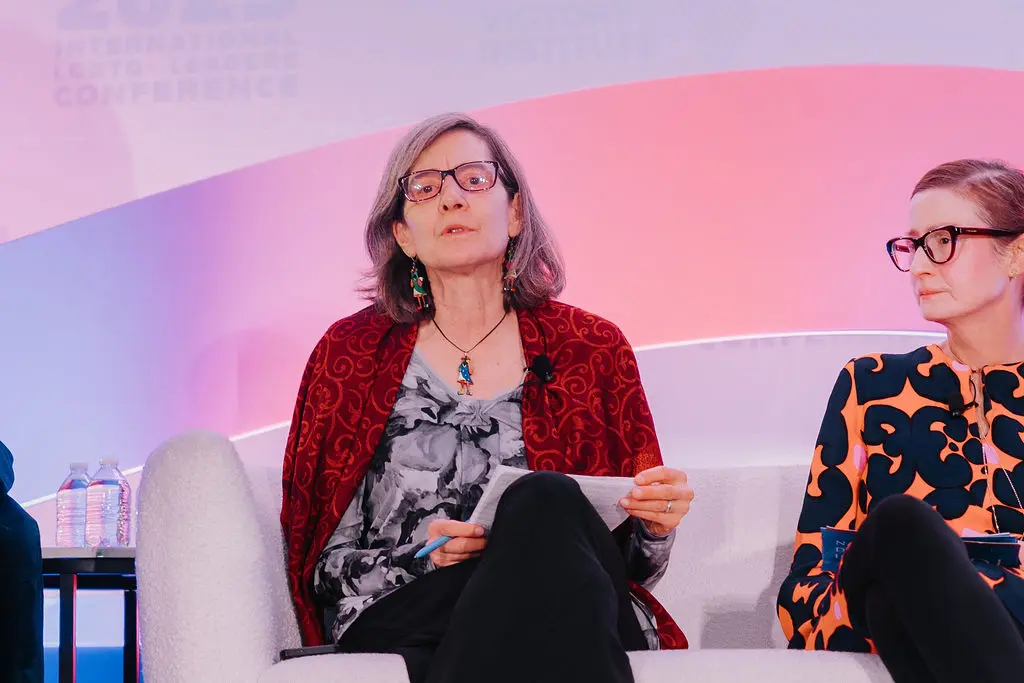
Arlene Tickner stresses that progress cannot be viewed as linear at International LGBTQ+ Leaders Conference. Photo by United Photography.
“We have now a diversity caucus that’s been very active in promoting innovative, I would say revolutionary legislation that recognizes the rights of trans people, for example,” said Tickner. “We’ve also incorporated into all of our work related to peace-building provisions that provide for not only an intersectional lens but also strong measures to guarantee participation of LGBTQI+ persons.”
Though she said Colombia is at war with itself when it comes to LGBTQ+ protections, pointing out rising discrimination and violence against LGBTQ+ people, including the killings of transgender people.
“So we have this tension between progress and backtracking, which I think we need to also take into account when we identify positive trends that necessarily are going to exist alongside negative ones,” said Tickner.
While all the panelists agreed that global solidarity in the fight for LGBTQ+ protections is essential, even when progress and the rollback of protections are at war, De la Torre closed out the plenary discussion by encouraging leaders to keep fighting for change together.
“All of our work is an invitation for all of you and all of us to keep thinking globally, keep thinking about collective liberation, whether that’s local or global,” said De la Torre.